
Near the end of No Other Choice, Mi-Ri says something that initially seems small. She mentions that she doesn’t want to resume her tennis lessons. It’s an understated line. No confrontation. No dramatic revelation. Just a quiet decision about something that once filled her time.

The moment lands with unexpected weight. Tennis, earlier in the film, represented a certain kind of life. One where the household is stable enough to allow leisure, where the future feels predictable enough to plan around small pleasures. Lessons, schedules, afternoons spent practicing on the court. Other hobbies and interests. Ordinary things.
By the end of the film, Mi-Ri no longer wants to return to that.
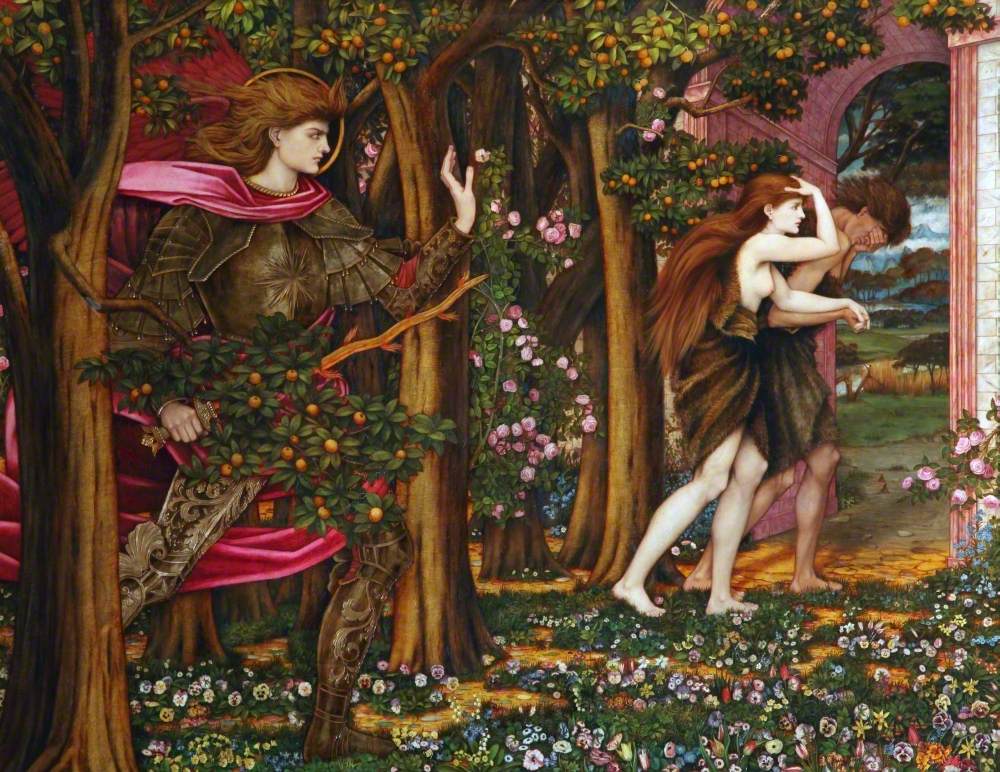
The line stayed with me. After sitting with it for a while, an unexpected parallel came to mind: the story of Eve and Adam in the Garden of Eden.
But not in the usual way the story is invoked. In Genesis, knowledge enters the world through an explicit act. Eve eats from the Tree of Knowledge of Good and Evil and gives the fruit to Adam. Innocence ends because someone offers the fruit and someone accepts it.
The dynamic between Man-su and Mi-Ri unfolds differently. Man-su does not offer Mi-Ri the fruit. If anything, he seems determined that she should never see it. As his situation grows desperate, Man-su descends into violence. The acts he commits are driven by fear, humiliation, and the brutal arithmetic of survival. Yet he keeps these acts compartmentalized. The household continues. Meals are shared. The rhythms of domestic life persist.
It feels, at times, as though he is trying to preserve a garden for her, for their family. His logic, twisted though it is, seems almost protective. If Mi-Ri never knows what he has done, then perhaps the ordinary life they built together can remain intact. The moral damage will stay contained within him.
But the boundary he tries to maintain proves impossible. Mi-Ri learns anyway. Not through confession, not through an offered truth. Knowledge arrives through small fractures: changes in Man-su’s behavior, the tension surrounding their circumstances, the slow accumulation of clues that make innocence increasingly difficult to maintain.
She begins to understand enough. And once she understands, the garden closes.
That is why the tennis line feels as heavy as it does.
Tennis is not merely a hobby she no longer feels like pursuing. It belongs to the earlier world, the one where the household’s stability could be taken for granted, where the moral ground beneath everyday life appeared solid and uncomplicated. Returning to the court would require pretending that nothing has changed. Mi-Ri knows better.
What makes this moment particularly striking is that the film does not frame her realization as melodrama. There is no explosive confrontation, no declaration that the marriage must end, no explicit moral reckoning delivered in dialogue.
Instead, Mi-Ri quietly reorganizes herself around the truth. She does not expose Man-su. She does not leave him. She does not insist on a confession. She simply acknowledges, through her small choices, that the life she once inhabited is no longer available to her.
In the Eden story, the world changes the moment Adam and Eve know what they have done. They become aware of their vulnerability and cannot return to the innocence that existed before the fruit was eaten.
Mi-Ri experiences something similar. The difference is that no one handed her the fruit. Man-su tried to hide the tree. But knowledge, once it enters a household, has a way of spreading anyway.
By the time Mi-Ri declines to resume her tennis lessons, the garden has already closed behind her.
Leave a Reply