
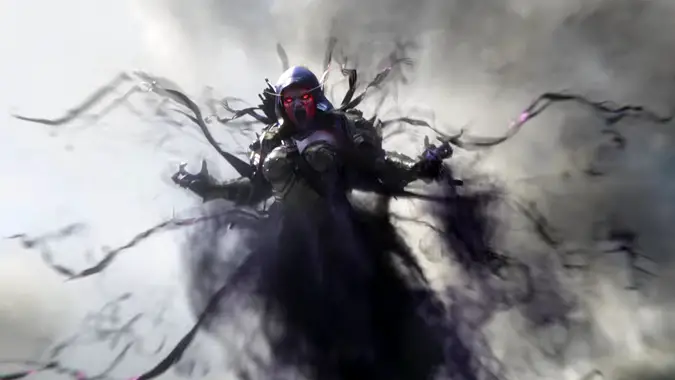
There is a moment in the lore of World of Warcraft that has been rattling around in my brain lately, vibrating at the same frequency as my research and other conceptual work. It’s the moment Sylvanas Windrunner breaks free from the Lich King.
It was an infrastructure failure. The Frozen Throne, the literal seat of a totalizing, psychic command-and-control system, cracked. The power leaked. The signal grew fuzzy. In that static, Sylvanas found the gap where her own will still resided.
The resonance of that moment? That is deep.
We operate within structures—libraries, universities, state systems—that often feel like a hive mind. There is a standard operating procedure, a set of relational labors we are expected to perform to keep the machinery humming.
The institution’s goals and your own become indistinguishable. You don’t follow the rules because you’re forced to. You follow them because you’ve forgotten they are rules made by someone else. Gramsci called this hegemony. Bourdieu called it habitus. Whatever the term, you are a loyal unit in the Scourge of bureaucracy.
But then, the throne cracks.
A crack in the infrastructure isn’t always a catastrophe. That leakage in power is sometimes an opening.
For those of us working within these spaces—the middle managers of epistemic infrastructure—that leakage is where agency lives. It’s the moment you realize the voice in your head (the institutional “we”) isn’t actually yours.
Sylvanas didn’t just walk away. She gathered the others who had also felt the signal fade. She turned a moment of structural failure into a new collective identity: The Forsaken.
Much of our relational labor is spent trying to mend these cracks, deciding which ones are worth widening. It is often worth reframing disloyalty or gaslighting in professional spaces as openings. The system is trying to suppress the fact that its signal is actually weakening.
Breaking free from a totalizing institutional identity is painful. For The Forsaken, it meant realizing they were dead, discarded, and alone. For us in the world beyond Azeroth, it might mean realizing that your loyalty belongs to the work and the community, not necessarily the institution (that is, the Frozen Throne).
I’m still navigating my own Faol’s Rest—that quiet, liminal space between the old faith and a new, more difficult reality. But there is a certain power in the static. When the signal fails, you finally get to hear your own voice.
And sometimes, that voice starts with a scream.
Leave a Reply