
Didn’t we almost have it all / When love was all we had worth giving?
— Whitney Houston, 1987
I am not a historian of the internet. I want to say that definitively at the start, before the argument gets going. Because the argument I want to make is going to make claims that historians, media theorists, and platform economists have made more clearly, more rigorously, and with better citations than I am about to. I am aiming for something else. I am a witness. And my witness position is not a minor quirk of what I am about to say. In fact, it is the whole reason I can see, and say, all of this at all.
Whitney Houston was inescapable when I was growing up. So was Jamie Rivera, who covered her song. It was annoying, always on the radio. The adults in my life loved the song so much, they played it constantly. Tuned to it when they caught it on the airwaves. The feeling it generated traveled across the Pacific, into houses, into childhoods, into the bodies of people who had no business being that close to something so large. That is what music does and has always done. It crosses distances that everything else respects. The hierarchy said Whitney Houston was elsewhere, was the kind of person who existed at a huge distance, removed from the kind of person I was. Jamie Rivera, a Filipina singer covering Whitney Houston, was as close as we could get. But even Jamie Rivera was far away. She was a media personality. We were just ordinary people living our small lives. The music, though, said Whitney and Jamie were right here, right next to me, to us. Both things were true at once. I learned early to live in that contradiction. The feeling arriving whole and the distance remaining intact.
I grew up in a world where creators were elsewhere. Where knowledge flowed in one direction. Where the people who made things that mattered — those who wrote the books, who sang the songs, who recorded things, who showed up in magazines and television shows, who set the terms of the conversation, who got to decide what counted — lived at a distance that was not merely geographic. It was ontological. They were the kind of people who made things. I was the kind of person who received them, gratefully, from a long way away.
The hierarchy was not invisible then. That is important. It was legible, structural, and largely unremarkable. It was the way the furniture of a room is unremarkable when you have never seen a room arranged differently. You knew where you stood. Class knew. Race knew. Gender knew. Geography knew. The Third World knew with a specificity that the First World, which set the terms, did not have to know at all.
I grew up inside a different kind of fence before I ever touched a computer.
The fence isn’t just a metaphorical one. It is also a literal, historical, an authoritarian one.
I was a child of Martial Law, a Philippine Gen X formation that learned early that hierarchy was not an abstraction but a daily condition that’s inhabited, like the weather. The distance between the people who made things and the people who received them was not just cultural or economic. It was enforced. It was policed. It was the architecture of the world.
My adolescence unfolded in the years when that architecture cracked.
Ninoy Aquino’s assassination, the street uprisings, the Marcos dictatorship’s collapse, all of it arriving at the exact developmental moment when a person learns what power is and what it isn’t. I watched a vertical system wobble, then fall, and I learned something that never left my body: fences are real until suddenly they aren’t. Hierarchy is load‑bearing until the day it isn’t. People can push, and sometimes the world gives way.
Of course, it took a while for me to put all this together. At the time, I was a kid, happy to not have to go to school, to be able to do the things I wanted to do, which were mostly read novels, listen to the radio, and watch television.
By the time I migrated to the United States at seventeen, I had already lived through one FAFO era. I call it that, but I don’t mean the meme version. I mean the historical one, the kind where people test the structure and the structure breaks. I carried that literacy with me. The knowledge that systems are contingent, that distance is manufactured, that collapse is survivable, that possibility can arrive abruptly and without permission.
When the feral internet appeared, the fence dissolved again. This time digitally. I recognized the feeling instantly.
It wasn’t new. It was familiar. It was the same shock of sudden horizontality, the same astonishment at what people will do when the gate is open. The commons felt like déjà vu. A second life in a world where the distance was gone and ordinary people could walk through carrying everything they had.
And then, for a moment, a specific, dateable, astonishing moment, something happened to the fence.
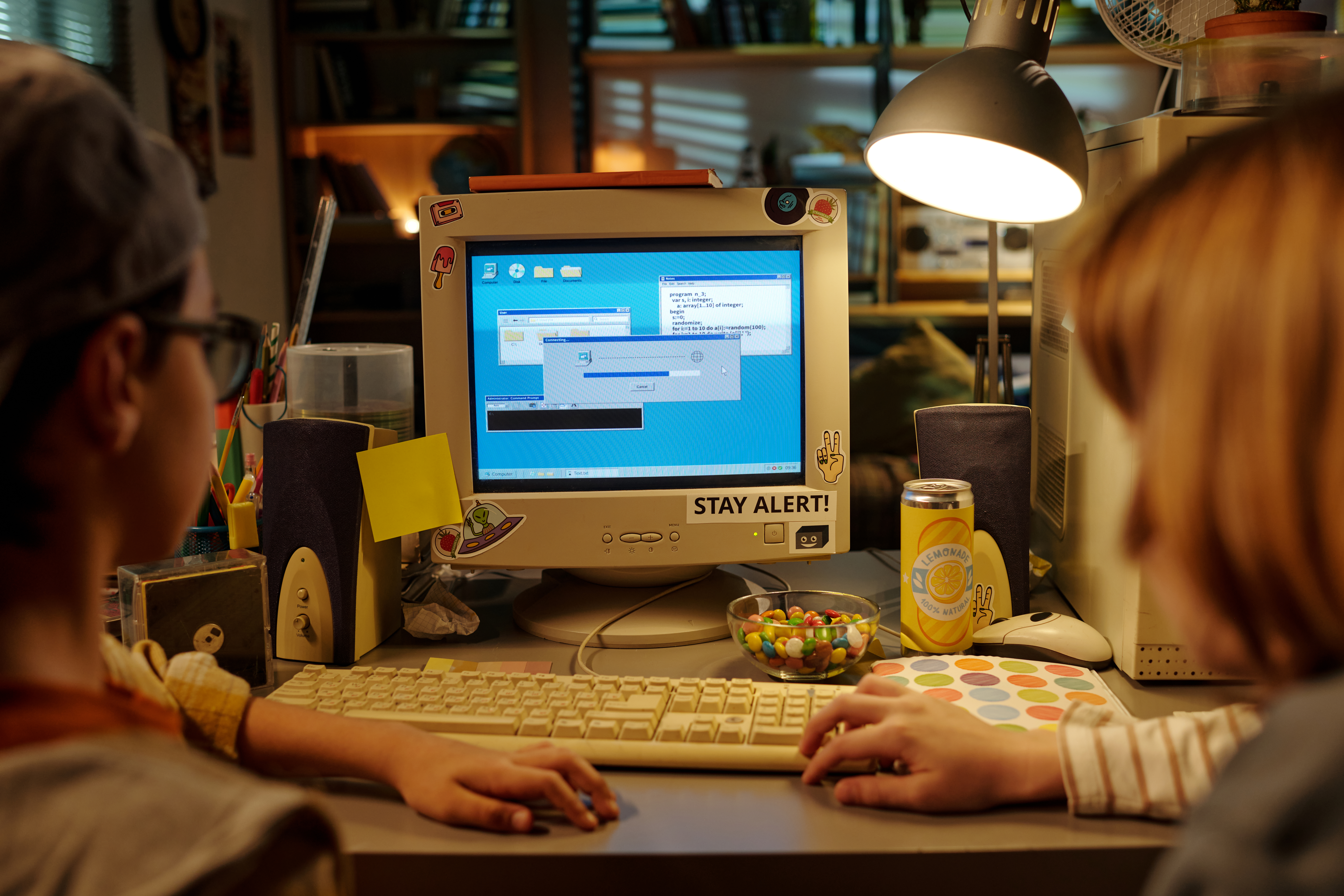
The internet in its feral years was not what we were promised it would be later, after capital had finished explaining it to us. It was not a marketplace. It was not a platform. It was not a content delivery system or an engagement optimization engine or a personal brand incubator. It was, improbably, gloriously, briefly, a commons. An actual agora.
People were building Wikipedia. Not because someone paid them. But because they knew something and wanted to share it. The fence was gone, so people walked through, and wrote things down. People were writing Open Source software, Linux, Apache, the entire invisible architecture that the web ran on, and giving it away. That giving away was not a failure of the market but a refusal of it, a declaration that some things were worth doing for reasons the market could not adopt, understand, or digest. Yochai Benkler, watching all of this, called it the wealth of networks, the peer production commons. What he meant was human beings, given the right conditions, will organize themselves generously. The rational actor who optimizes only for personal gain turned out to be a fiction. What people actually did, when the fence came down, was share.
I was an early-career librarian at the time. I messaged scholars I had no business contacting. Let me pause here for a bit. Here’s what I mean by “no business.” I mean that the analog world had a very clear account of who got to be in conversation with whom, and that account did not include me writing to people whose books I had read with the urgency of someone finding water.
But the fence was down. And so I wrote. And they wrote back. Not all of them. But enough. Enough to make the hypothesis feel like fact. That the network had dissolved something structural, that the distance was no longer load-bearing, that the conversation was genuinely open. And I was a part of it.
This was happening everywhere and at every scale. In Cairo and Tunis, people were using the horizontal network to do what vertical power had always prevented. Jane McGonigal was publishing Reality is Broken and arguing that games — games — were training people in exactly the cooperative, purposeful, meaning-making capacities that would save the world. The argument did not seem crazy because everywhere you looked people were doing things for free that the market said they had no incentive to do. The things were good and the world the things were building looked, briefly, like something worth having.
In World of Warcraft, two people spent 2,500 hours making a movie about a magical pastry and a gnome robot in a tank with a ginormous magnet and released it for free and signed off with: WE LOVE YOU ALL! The thing is, these two people were not the only ones. That was the whole economy. Love. The entire transaction, conducted outside the market, in the commons, for strangers, because the fence was down and they walked through it carrying everything they had.
It was all love. That must be said plainly and exactly because the theoretical vocabulary (gift economy, peer production, networked commons) is accurate, but cold. And the thing it is describing was anything but cold. It was warm in the specific way that only ungoverned devotion is warm. Nobody had told these people what to do with their love and so they did everything with it. They built the encyclopedia. They wrote the operating system. They made the movie. They submitted the screenshot to the database for strangers they would never meet. They stopped in the middle of a contested Azerothian zone that was trying to kill them to wait beside a stranger’s corpse until the stranger came back.
Maybe we did have it all. Just very briefly.
This is the revision I want to make to the song. Not almost. Not quite-but-not-quite. Not the ache of the thing that never fully arrived. I want to emphatically state that this is the ache of the thing that was completely real and is now completely gone. We had it. The commons was real. The scholar wrote back. Love was the whole economy and the economy worked. It was not a dream of what the internet could be. It was, for a moment, what the internet was.

Didn’t we have the best of times / When love was young and new?
The feral internet was not uniformly good. I want to say that too, with equal clarity. The same ungoverned conditions that made the generosity possible also meant there were no guardrails on the cruelty. The ganker in Stranglethorn Vale and the griefer in Second Life were also inside the world, also feeling something, also ungoverned. The contact they found was the only kind available to them in that moment. The commons was real and it was also incomplete. The fence being down meant everyone could walk through, and not everyone came carrying the same things.
But the hypothesis was proven in the aggregate. That is what I will not concede. The machinima makers proved it. The Wikipedia editors proved it. The Open Source developers proved it. The scholar who wrote back proved it. The Ballad of the Noob — legendarily, gloriously inaccurate lore that bore only a nodding, glancing acquaintance with actual Warcraft lore — proved it. Nobody cared that it was wrong. The inaccuracy was proof that the feeling was bigger than the facts, that the love had outrun the encyclopedia, which is exactly what love is supposed to do.
This was the best of times. Not despite the wildness. But because of it. The wildness and the beauty were the same thing. You cannot have one without the other. The ungoverned devotion — the 2,500 hours given freely, the screenshot submitted into the void, the stranger who stopped — was beautiful precisely because nobody had told it what to do with itself yet. Nobody had optimized it. Nobody had inserted a monetization mechanism between the feeling and its expression.
Love was young and new. That does not mean naïve. It means ungoverned. It means the feeling had not yet learned what it was supposed to optimize for, had not yet been told that 2,500 hours required a return on investment, had not yet been handed a content strategy and asked to perform itself for an algorithm. It just went where it wanted to go. Which was toward other people, freely, with everything it had.
A moment in the soul can last forever / Comfort and keep us / Help me bring the feeling back again
It was always going to end this way.
I want to say that clearly, before this elegy tips into something false. The feral internet was not ended by a betrayal. It was ended by the logic that was always waiting at the edge of it. The logic of enclosure, of capital finding the commons and asking what it was worth and then answering its own question. The gift economy was real and the exploitation of the gift economy was always structurally available. The libertarian energy that made the fence feel optional was also, from another angle, the energy that made the fence’s reconstruction feel inevitable. We shared our expertise freely because we believed in the project. The project was also, from the beginning, sitting inside a system that knew how to absorb belief and convert it into product. Both things were true. They are always both true.
I am a cultural materialist. I know where the bodies are buried. I know that the Arab Spring that the horizontal network enabled also generated the surveillance infrastructure that authoritarian states then used against the same people the network had briefly amplified. I know that the Open Source commons that idealists built became the foundation on which billion-dollar companies erected proprietary empires, extracting freely what had been given freely without returning the courtesy. I know that Twitter became X, which is not just a dumb rebrand but a legible symbol of what the enclosure looks like when it stops being subtle. I know that the newspapers the feral internet disrupted threw up paywalls not simply out of greed but out of survival, and that the information ecosystem we got in exchange is worse by almost every measure that matters. I know that Facebook gave us the Marketplace and then gave us mostly ads, and that the Umbrella Movement and the Arab Spring showed us both what the horizontal network could enable and what happened to those movements when the platforms decided they were inconvenient.
I know all of this. I am parking these, temporarily, not because they don’t matter. They matter enormously. These are the mechanisms, they are what have to be understood and named and fought. I put them on hold because this essay has a different job right now. This essay’s job is to keep the evidence alive.
The enclosure arrived dressed as improvement. The platforms that came to organize the feral internet were, in most measurable ways, better than what they replaced. Faster, more reliable, more beautifully designed. YouTube was better than warcraftmovies.com. Wowhead was more accurate than Thottbot. Twitter connected you to scholars more efficiently than cold emails into the void. Each individual upgrade was legible, recognizable as progress. What was being lost in the aggregate was not.
What was being lost was the gift logic. The enclosure worked by inserting, quietly and then less quietly, a different logic into the same spaces where the gift had operated. The platforms needed engagement. Engagement required content. Content required creators. Creators, the platforms eventually reasoned, should be compensated. Yes, they should. 2,500 hours aren’t nothing. But the compensation mechanism, once installed, changed what it meant to make something and put it online. The 2,500 hours stopped being an act of devotion and became a question: was it worth it? Worth it, in what sense? In the new sense. The only sense the platform could entertain.
The algorithm arrived and the ungoverned space became the most governed space in human history. Not governed by laws or institutions. Governed by optimization, which is more total than law because it shapes not just what you are allowed to do but what you want to do, what feels natural, what feels like success. The love became labor. The labor became content. The content became product. And somewhere in that chain of translations the 2,500 hours stopped being an act of devotion and started being a business decision someone had to justify.
The hierarchy reasserted itself. The new gatekeepers are the algorithm, the platform, the brand deal, the monetization threshold that requires a certain number of subscribers before the infrastructure treats you as worth surfacing. These are not the same as the old gatekeepers, who were the publishers, the broadcasters, the institutions that decided whose knowledge counted. But they do the same work. They decide who gets heard. They make the distance.
And the fence went back up. It’s not the same old fence. A brand-spanking new one, dressed as neutrality. The platform does not tell you that you are the kind of person who receives things from a long way away. It just declines to surface your content. It just shows you, in aggregate, over time, where you stand.
Important people are far away again. That is the simplest way I know how to say it. The briefly horizontal network got re-verticalized, and the people who had always been on the outside of the vertical looked at the new hierarchy and recognized it, even though it was wearing different clothes. The contradiction that Whitney Houston and Jamie Rivera briefly helped resolve, the feeling arriving whole while the distance remained intact, is intact again. The feeling still travels. The conversation has re-stratified.
The conditions changed. The people did not.

Here is what I mean by evidence. The machinima makers did not have to spend 2,500 hours on a movie about a magical Danish. Nobody made them. No algorithm surfaced the project and told them it would perform well. No brand deal offset the cost of the hours. They did it because they loved something and wanted to make something out of the love. The fence was down and so they walked through it carrying everything they had. They made the thing and gave it away and said WE LOVE YOU ALL! and meant it. That happened. It is in the record. It cannot be un-happened.
The scholar did not have to write back to the stranger with no credentials and no institutional affiliation who had written out of nowhere with the urgency of someone finding water. They wrote back. That happened. It is in the record.
The Wikipedia editors, the Open Source developers, the person who submitted the wrong screenshot to Thottbot for strangers who would triangulate it against other wrong screenshots and find their way anyway. All of them, they did not have to do any of it. But they did. It is in the record.
What this proves is not that the gift economy is naturally stable or that capital can be wished away or that the feral internet was a sustainable model for human civilization. It proves something smaller and more important. That human beings, given the right conditions, will organize themselves generously. Will choose the project over the paycheck. Will wait beside a stranger’s corpse. Will believe in something enough to give 2,500 hours to it for free.
The conditions were brief. The conditions were, in retrospect, always fragile. The conditions are currently not present in the way they were. And the capacity they revealed is permanent.
Help me bring the feeling back again.
This is not a request to restore the feral internet. I make myself clear about that. The feral internet was a specific historical conjuncture, a window between the invention of the technology and capital’s full comprehension of what it had on its hands. And windows like that do not re-open the same way twice. What is being asked for is not the window. It is the feeling the window briefly made possible. The feeling of possibility itself. The knowledge, carried in the human body, that the hierarchy is not load-bearing. That the fence is a choice, even when it doesn’t feel like one. That somewhere on the other side of it, someone is waiting to write back.
It was always going to end this way. But that doesn’t make it any less glorious. Brief and shining and filled with more goodness than the systems around it knew what to do with. We had it wholly, if briefly. The brevity is not the point. The wholeness is the point.
A moment in the soul can last forever. This one should. Not because it was perfect. It definitely wasn’t. But because it is evidence of what becomes possible when the conditions change. Evidence that the love is there, waiting, underneath whatever the platform has decided to optimize for today. Evidence that given half a chance, given a fence with a gate in it, people will walk through carrying everything they have.
That is why we should not forget. Not for nostalgia’s sake. For the sake of the future. For the sake of looking at what comes next and knowing what to look for. Not the feral internet specifically, but the feeling it carried. The ungoverned devotion. The gift given into the void for strangers. The love that had outrun the encyclopedia and needed somewhere to go.
Didn’t we have the best of times.

For everyone who submitted the screenshot. For the warlock who waited. For WE LOVE YOU ALL!
The ride with you was worth the fall my friend
— Whitney Houston, 1987
Leave a Reply