
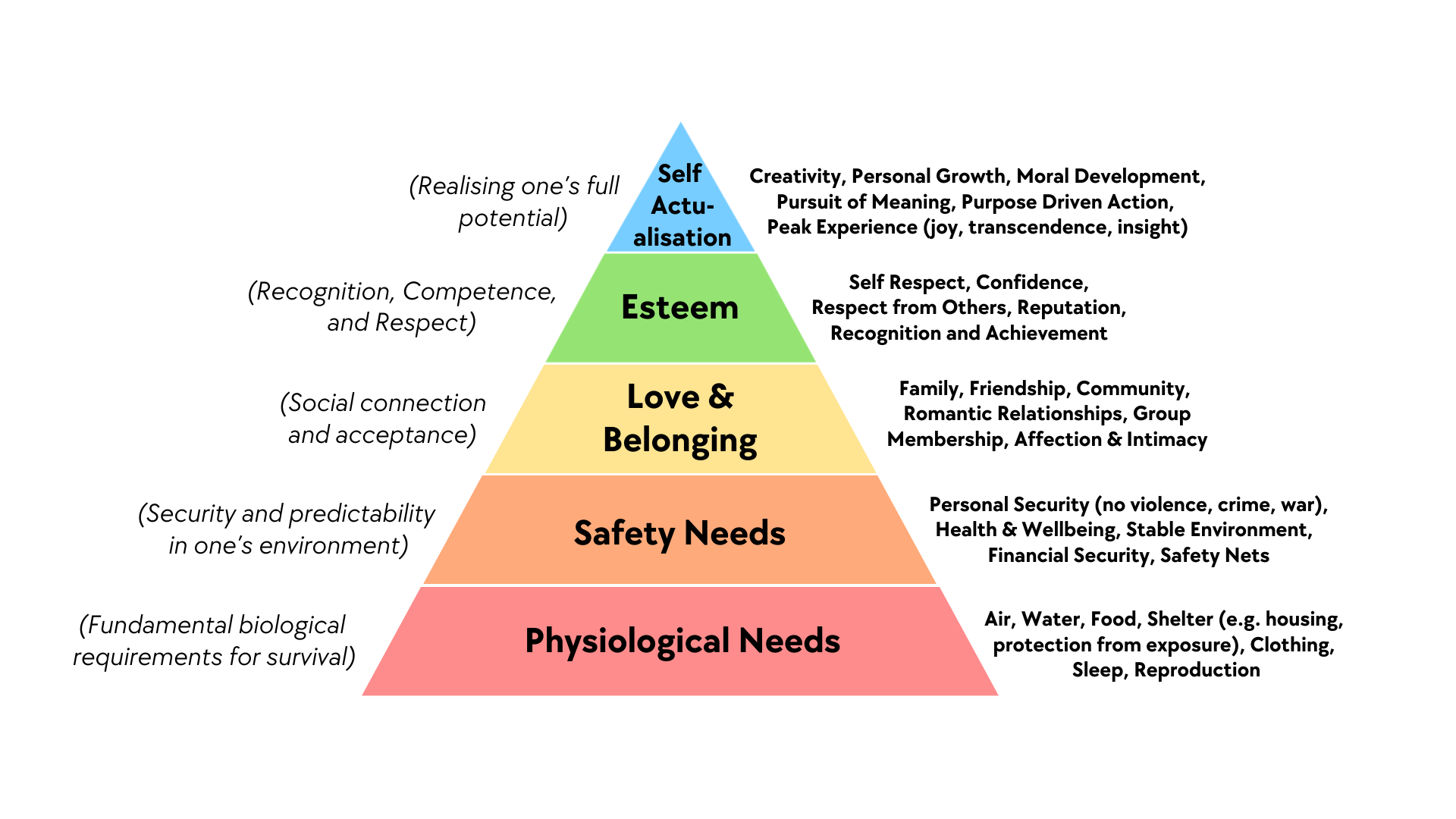
A YouTube essayist named Kneecap Jake made a video called You Never Truly Quit World of Warcraft. He could have stopped at addiction. The algorithm would have rewarded him for it by sending many viewers his way. Instead, he kept pulling the thread until he found what was actually there: belonging, meaning, competence, purpose. Four things. The addiction narrative, he concludes, is too narrow.
I agree. And I want to go further.
I have been playing World of Warcraft since December 2006. My main is a Night Elf Beast Mastery hunter named Linnarra. She has a spirit beast named Thunder. I know what it is to dwell in Azeroth. Not just to escape into it, but to live there alongside everything else. I know, from the inside, what the game provides and what it costs. I know why leaving is hard. And the addiction story is too convenient, too dismissive a label. It points to problem behaviors, yes, but it doesn’t get to what is being served by engaging in Azeroth.
I say this because you don’t quit belonging. You don’t quit the place that held your competence legibly, your progress visibly, your self recognizably. In fact, wanting and needing belonging, competence, purpose, and meaning aren’t the same as shaking an addiction. Yes, you can close the account. But you cannot unfeel what it felt like to be known there.
The Four Things
Kneecap Jake starts by asking the more interesting question that the addiction narrative fails to ask: how can a game like World of Warcraft become so important to someone in the first place that they forego many things in their actual life, their relationships, and responsibilities? I think this is a significant question and deserves serious consideration and thought.
He first focuses on choice. How a player actively chooses the game over sleep, over school work, over responsibilities. The continuous thread of small decisions that accumulates to choosing the game each and every time. Still, this only points to what World of Warcraft gives a player that is difficult to obtain in real life.
He names them plainly: belonging, meaning, competence, purpose. Four things that sound simple until you try to find them reliably in the world outside the game.
Belonging: you are not alone here. The guild remembers you. The raid needs what you specifically bring. Your absence is felt. Your return is noted.
Meaning: what you do matters to something larger than yourself. The dungeon does not clear without you. The world — literally, the world — responds to your actions.
Competence: visible, legible, unambiguous, yours. The quest log does not gaslight you. Your level is not up for institutional interpretation. You know what you accomplished because the game tells you, cleanly, without politics. You progress, you see it. Your improvement is clear.
Purpose: directionality. Forward motion. Clear goals. The next quest exists. There is always a next quest. Progression is clearer than in real life. The game nudges you and marks where you’ve been, where else you have yet to explore. You can see and feel what is worth working towards.
All of these are not game features. They are human requirements. And the addiction frame, well-meaning and clinically tidy, locates the problem in the person’s relationship to the game rather than in the scarcity of these four things in ordinary life. If the outside world offered belonging, meaning, competence, and purpose as reliably as Azeroth does, we would not need a clinical category for the people who choose to be in-game.


Kapwa and the Ground Beneath the Game
In Filipino relational philosophy, kapwa is the concept of shared selfhood. It is not a virtue or a practice. It is an ontological condition. The self is always already in relation. Relation is not something you enter. It is what you are made of.
Kapwa and what actually happens in Azeroth are telling the same story: the self is embedded, relational, prior to individualization. The shared self is not a destination. It is where you already are.
You cannot play World of Warcraft alone in any meaningful sense. Even the solitary content — which I inhabit most of all: the delves, the solo quests, the quiet exploration — happens inside a world made legible by collective presence. The economy, the lore, the landscape itself: all of it is held by a community that has been there, is there, will be there. Your character exists inside a shared world that requires your embeddedness to function. The game does not make an exception for rugged individualism. The guild doesn’t work if only one person self-actualizes. The raid requires everyone’s competence to be visible and load-bearing. The world responds to collective action in ways that individual action cannot replicate. Azeroth didn’t design this as a philosophical intervention. It designed it because it’s true, and truth makes for better gameplay.

The Counterevidence
There is a particular kind of person for whom Azeroth is not escape. It is counterevidence.
When your competence is systematically invisibilized in your working life — when your contributions are used and your standing is denied in the same breath, when the institution leverages your centrality and refuses to acknowledge it, when you are asked to do the work of recognition for others while your own goes undocumented — you develop a specific relationship with any space that sees you clearly.
The quest log does not gaslight you. Linnarra’s level is not subject to committee review. The spirit beast you tamed — Thunder, a rare spawn, an essence of Hati, patient and particular — is yours because you were there, you waited, you were paying attention. Nobody can minute-take that away from you.
For people whose outside lives offer this kind of scarcity — of recognition, of legible progress, of a self that is seen and held — Azeroth is not pathology. It is proof. Proof that the self is competent, that effort produces visible results, that community can hold you without requiring you to disappear.
The continuum matters here. On one end: dwelling. Azeroth as a place you return to, that holds something real, that exists alongside a full life. On the other: refuge that became the only room in the house. The same mechanism produces both outcomes because the same human needs are being met. The difference is not pathology of attachment. The difference is the poverty of alternatives.
If the outside world were better designed, fewer people would need to live entirely inside the game. That is not a critique of the people who do. It is an indictment of the outside world.

What Would Azeroth Do
The draw is the map of what’s missing.
People will cross oceans of time and money to find belonging, meaning, competence, and purpose. They will build characters over years, maintain relationships across continents, grieve the deaths of guild members they never met in person. This is not irrational. This is the human animal doing exactly what it is designed to do — finding the conditions it requires and staying there.
The question is not how to get people to stop going to Azeroth. The question is how to make earth more like it.
Visible competence. Legible progress. A shared self with stakes. Community that remembers you. A world that responds to your actions. The knowledge that what you do matters to the fabric of the place. None of this is fantasy. All of this is a design failure of institutions.
We have known what humans need for seventy years. We built a fantasy world that delivers it more reliably than most workplaces, most schools, most professional communities. And then we called the people who went there addicts.
Maslow with better UI.
The joke lands and then you realize the joke is really an indictment.

You Never Truly Quit
Kneecap Jake is right that you never truly quit. Not because the game is addictive in the clinical sense. Because the game gave you something real, and real things leave marks.
Linnarra is still in me even when the subscription lapses. The spirit beast, the stable, the patient work of attention that taming requires — these are not separate from my intellectual and relational life. They are continuous with it. The same quality of attention that built the character is the attention I bring to everything else I care about.
What Azeroth taught me, what it keeps teaching me, is what the embedded self feels like when it is actually held. Not instrumentalized. Not surveilled. Not leveraged for someone else’s institutional gain. Held.
I know what that feels like. I know it because a game showed me. It resonates with what I know in communities of my formative years. I carry that knowledge into every room I walk into — every institution, every committee, every professional space that asks me to forget I know it.
Kapwa says the self is already shared. Azeroth says: yes, and here’s what it looks like when you build for that instead of against it.
The next quest exists. There is always a next quest.
Notes
Kneecap Jake. “You Never Truly Quit World of Warcraft.” YouTube. The direct provocation for this essay and a genuinely honest piece of cultural criticism. He earned this citation.
The relationship between Maslow’s 1938 Siksika visit and his later theoretical framework is genuinely contested and worth your time. Start with Ryan Heavy Head.
On kapwa: Virgilio Enriquez, “Kapwa: A Core Concept in Filipino Social Psychology,” in Philippine World View (1986). Kapwa is constitutive, not instrumental — not an engine for relational behavior but the prior condition that makes relational orientation intelligible.
Abraham Maslow. “A Theory of Human Motivation,” Psychological Review 50:4 (1943). Cited here as the footnote it deserves to be.
Leave a Reply